
Denver County 72-Hour Release Gap
Many sheriffs publish a rolling list of people released during the last three days. Denver's official public materials reviewed for this project do not. The Denver search found at denvergov.org/inmatesearch is built around people in current care and custody. It has current-booking fields and detail paths, but the research did not find an official 72-hour release archive, retention statement, or update cadence.
That changes the correct workflow. Instead of promising a list that Denver does not publish, a Denver County 72-hour release check should confirm whether a person left Denver custody during the last few days and where that record now lives. VINE may show a custody-status change. Denver County Court may show a bond, warrant, hearing, disposition, or sentence entry. Denver Sheriff records can document a release date, release reason, booking sheet, or transfer when public web tools do not.
Denver County 72-Hour Fields
Denver's public current search fields are helpful for a three-day check because they identify the booking that may have just changed. They do not create a rolling release list. A real 72-hour feed would need to keep released bookings visible for a defined period and show a release timestamp or release type. The official Denver materials reviewed did not provide that feed.
| Field or source | Use during a 72-hour check | Limit |
|---|---|---|
| Last, first, middle name | Find the person in the current Denver search if still held. | Name variants can miss a record, and released records may not remain listed. |
| Booking number | Match a court, VINE, or Sheriff records request to the same booking. | The number alone does not state why the person left custody. |
| Facility abbreviation | Distinguish Downtown Detention Center from Denver County Jail or another listed location. | It does not prove where the person went after release. |
| Court schedule details | Check whether a hearing, bond, or disposition may explain the custody change. | A court schedule is not the same as a release record. |
| VINE status | Check for a custody-status change or notification. | It does not close the court case or prove sentence discharge. |
Check Denver Three-Day Releases
A rolling three-day workflow should catch events that a same-day check may miss. It is most useful when a person may have bonded out late in the day, left during a weekend, moved between Denver systems, or been transferred before a family member could confirm the destination. For true same-day focus, use Denver County 24-Hour Releases.
- Search the Denver inmate search with the broadest reliable data first: booking number if known, then exact name, then partial name.
- Record the facility, booking number, CD or inmate number, and booking status if the person still appears.
- Check Colorado VINELink for a custody-status change, using name, ID, booking number, or agency filters where available.
- Search Denver County Court by case number, arrest booking number, or name and date of birth for bond, warrant, hearing, disposition, sentence, fines, or costs.
- Use Denver Sheriff records if the release event must be documented or if the public tools conflict.
- Search CDOC, BOP, or ICE only when the person was sentenced, transferred, or held by that separate system.
Denver's own materials point users outside Denver when the person is not found and another custody system may be involved. That is a routing clue, not a release guarantee.
Denver Weekend Release Checks
The three-day window matters most when court and jail timing do not line up neatly. A bond may be posted, signed, and processed through different offices. A court disposition may appear before a Sheriff record response. A VINE alert may arrive before a court portal view makes the reason obvious. Around weekends and holidays, a person can leave custody during a period when routine records help is harder to reach.
Denver's local bond information helps narrow the timing. The Sheriff Court Services page says bonding inmates are generally released within two hours after the bond is signed by all parties, while Denver County Court handles bonding-process questions. Colorado bond law also creates a six-hour rule in covered circumstances unless extraordinary circumstances exist. Those two facts should be used together: local practice helps estimate the day, and the court or Sheriff record confirms the event.
Denver Bond and Warrant Sources
The official Denver County Court online bond and warrant page is one of the most relevant public sources when a recent release may have followed bond processing or warrant action.
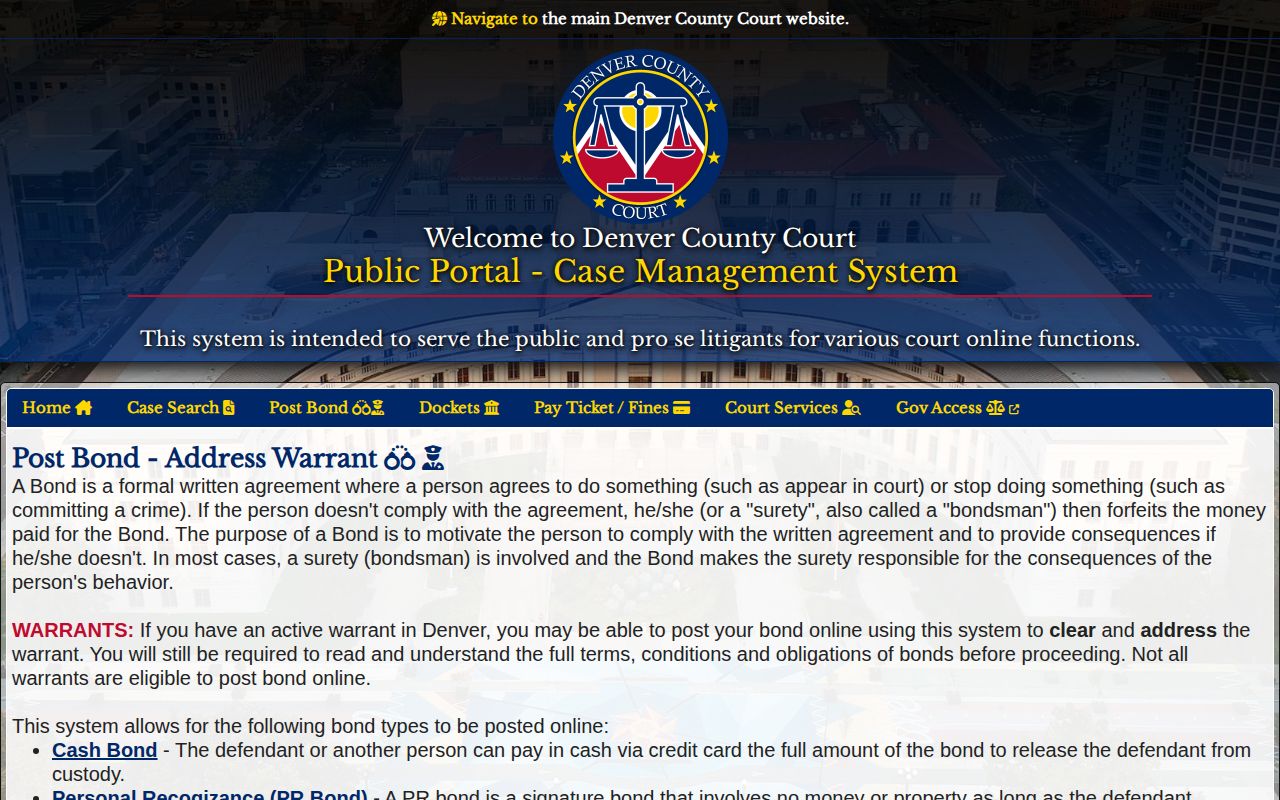
Bond and warrant data can explain why a person no longer appears in Denver custody, but it should be paired with VINE or Denver Sheriff records when a confirmed release date or release type is needed.
Denver Records After Three Days
A three-day release check often reaches the point where a records request is more reliable than repeating a live search. Denver Sheriff's public-records page says DSD criminal justice records are governed by the Colorado Criminal Justice Records Act. It also says the Civil Liabilities Unit accepts records requests electronically through the listed form and that telephone or social-media requests will be denied.
Ask for the narrow record that answers the release question. Useful terms include booking sheet, release date and time, release type, bond-release information, transfer record, and official-action record. Include the person's name, date of birth if known, booking number, inmate or CD number, facility, approximate booking date, approximate release date, and court case number if known. A narrow request reduces confusion and helps the records custodian locate the right event.
Note: Denver records may be redacted, sealed, or unavailable in part even when the release event itself is public.
Denver Release or Transfer
Three days is long enough for a local jail release to become a different custody question. A person can leave Denver Sheriff custody and enter CDOC if sentenced to state prison. In that case, CDOC Offender Search is the better source for current facility assignment, parole eligibility, mandatory release, and sentence discharge fields. A person can also move to another county, federal custody, or immigration custody.
| Possible result | Where to verify | Why Denver search may not show it |
|---|---|---|
| Release to community | VINE, Denver County Court, Denver Sheriff records. | The live search is not a recent-release archive. |
| Release to probation | Court record and probation office records. | Probation is supervision, not jail custody. |
| Transfer to CDOC | CDOC Offender Search and CDOC records. | The person is no longer in Denver Sheriff custody. |
| Federal or ICE path | BOP locator, ICE locator, federal or immigration records. | Those systems are separate from Denver jail. |
Denver 72-Hour Release Limits
A 72-hour Denver release check should not borrow another Colorado county's rolling feed logic. Research found no Denver page with a public last-72-hours release list. Denver's current inmate search can show whether someone is currently in care and custody, and its app fields can help identify the booking. The actual release event is confirmed by the court, VINE, Sheriff records, or the receiving agency.
That distinction protects the reader from a common mistake. A person absent from Denver's current search may have been released, but may also have been transferred, protected by sealing rules, misspelled, or delayed in a data feed. A person still shown in the search should be treated as still in custody until the originating agency confirms otherwise.
Denver County 72-Hour Records
When the three-day release window is the key issue, a narrow Denver Sheriff records request should ask for a release date and time range rather than a broad jail file. Include the person's full name, booking number if known, facility, approximate booking date, and the three-day period being checked. Denver's Civil Liabilities Unit accepts DSD records requests electronically, and the research states that phone or social-media records requests are denied.
Use the court record at the same time. A weekend bond, warrant clearance, sentence completion, or Monday court update may explain why the jail record changed during the 72-hour period. If the person moved to CDOC, BOP, ICE, or another county, the Denver release event should be matched to that receiving system.
For someone believed to still be in Denver custody but missing from the search, Denver's own search page directs users to call 720-913-3600. That call is for a current-custody problem, while the records request is for documenting a release after custody ended.
That distinction keeps the 72-hour workflow from turning into a false release list.