
DRDC State Release Path
Denver Reception & Diagnostic Center is a Colorado Department of Corrections facility. It is not a Denver Sheriff jail. For a Denver County defendant, the local jail release may actually be a transfer from Denver Sheriff custody to CDOC. Once the person enters CDOC, the release question moves to state-prison records, parole eligibility, mandatory release, sentence discharge, and adult parole status.
A person may leave DRDC for another CDOC facility after classification rather than leave prison custody. That movement should not be described as release to the community. If a CDOC record later shows parole, discharge, or a parole-region assignment, then the person may be out of prison custody but still under a sentence or supervision status.
| DRDC result | What it means |
|---|---|
| Current facility DRDC | State custody is active at the intake/classification facility. |
| Other CDOC facility | The person likely moved within state prison custody. |
| Parole assignment | The person may be out of prison but still on state supervision. |
| Discharge date | The CDOC sentence may have ended, subject to official records. |
Confirm DRDC Release
Use CDOC first for DRDC. Denver's inmate search can help show that a local jail booking ended, but it does not confirm a CDOC release. The state offender record may show current facility assignment, parole eligibility, next parole hearing, estimated mandatory release, estimated sentence discharge, current convictions, county, case number, and photo where available.
- Search CDOC Offender Search by DOC number when known, or by name and gender.
- Match the person by name, DOC number, age, case county, case number, and conviction information.
- Read the current facility assignment to see whether the person is still at DRDC, moved within CDOC, assigned to parole, or discharged.
- Check the CDOC Par. Board tab for scheduled parole hearings when release is pending.
- Use CDOC records or Time & Release when an official calculation or release date must be verified.
The Denver County release-date lookup page is the right internal route for more detail about estimated parole eligibility, mandatory release, and sentence-discharge dates.
The CDOC Offender Search screenshot from the manifest fits DRDC because it is the statewide system used for state-prison release checks.
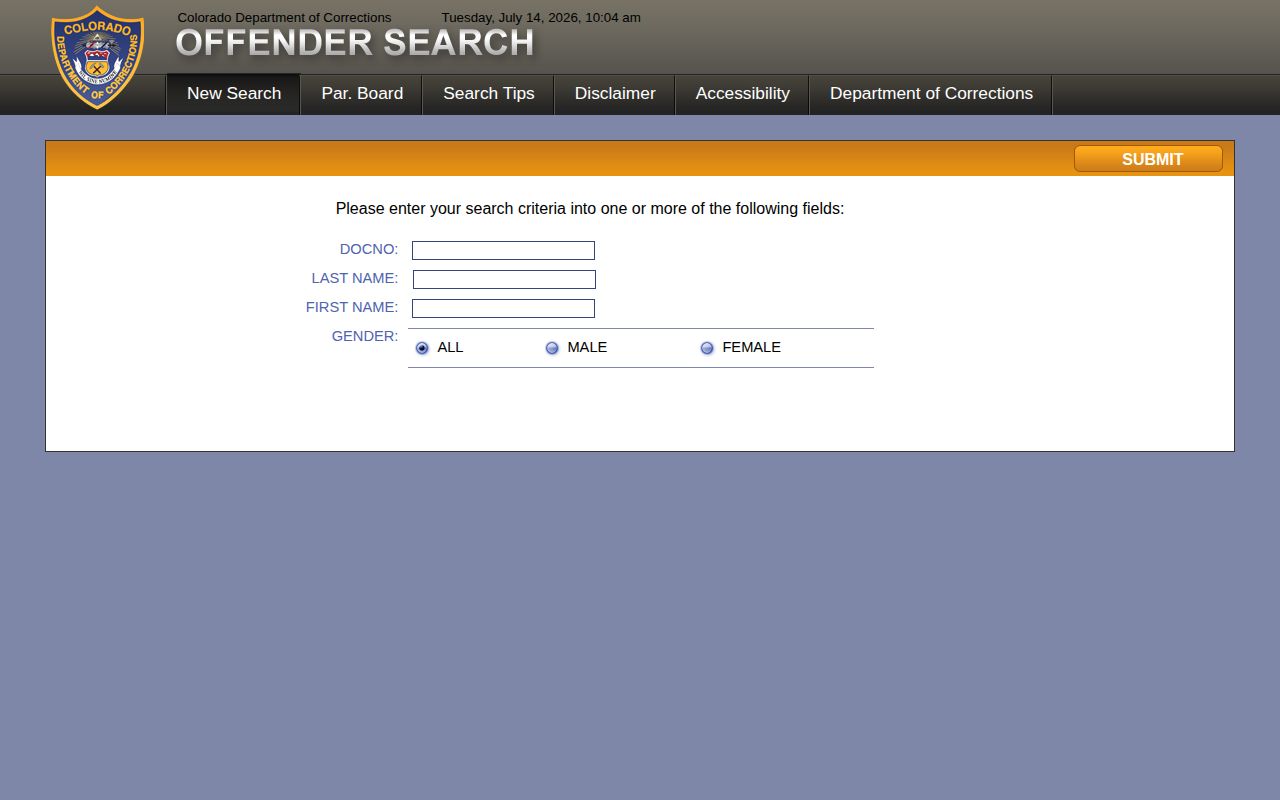
The screenshot reinforces the central rule for DRDC: use CDOC fields for state custody, not Denver's local jail roster.
DRDC Records Contact
Research did not provide a separate DRDC public phone or street-address contact block for release records. The reliable contact route is CDOC's statewide offender search and CDOC records process. For official time calculations, the CDOC application notice cited in the research points to Time & Release operations through the open-records email.
Denver Reception & Diagnostic Center
Denver, CO
Operator: Colorado Department of Corrections
Facility type: state prison intake/classification
CDOC release-record route
CDOC Offender Search
Time & Release / open records: doc_open_records@state.co.us
A CDOC records request should include the person's name, DOC number, date of birth if known, Denver County case number if known, and the exact date or status requested. Useful terms include parole release date, mandatory release date, sentence discharge date, current facility assignment, or current parole office.
About Denver Reception Center
DRDC matters to Denver County release research because it can be the first state-prison stop after a Denver case results in a CDOC sentence. A person disappearing from Denver Sheriff custody after sentencing may have been transferred to DRDC. That is a state custody transfer, not a release to the community.
CDOC projected dates must be read with care. Estimated parole eligibility, mandatory release, and sentence discharge are not the same field. A person can be released from prison to parole and still have a later sentence-discharge date. Public CDOC results are snapshots, and official time calculations should be verified through CDOC records when precision matters.
DRDC Release Records Route
For a Denver County case that moved from jail to DRDC, use two records tracks. The Denver Sheriff or court record explains the local transfer out of jail. CDOC explains the state-prison custody, parole date, mandatory release date, discharge date, or supervision assignment. Those records answer different questions and should not be collapsed into one release event.
Colorado parole eligibility and earned-time rules are individualized. Sentence date, offense date, presentence confinement credit, consecutive or concurrent terms, disciplinary action, parole-board decisions, detainers, and later court orders can all affect the date shown in a public record.
Denver court records can also help match the CDOC result. A Denver District Court felony case may show the sentence and case number that later appears in the CDOC record. That match is useful when a name search returns more than one state offender record.
DRDC Federal Or ICE Checks
ANGLE K still applies to state custody. An ICE detainer or federal warrant is separate from CDOC release. If CDOC or court records suggest an immigration or federal transfer, verify through the receiving federal system. ICE custody should be checked through the ICE Online Detainee Locator, and federal prison custody should be checked through BOP only when federal custody applies.
Note: A Denver jail transfer to DRDC means the local jail custody ended, but the state-prison custody question has just begun.
DRDC Classification Release Path
Denver Reception & Diagnostic Center is a CDOC intake and classification facility. For Denver County cases, a person may leave Denver Sheriff custody for DRDC after a state-prison sentence. That is a transfer to state custody, not a Denver jail release to the community. Once the person enters CDOC, the state offender record becomes the main public search route for facility assignment, parole eligibility, mandatory release, sentence discharge, and parole-related status.
A release from DRDC itself may not be the final prison release if the person is classified and moved to another CDOC facility. Read the current facility assignment, conviction county, case number, parole-board tab, and estimated date fields together. If an official time calculation is needed, the research points to CDOC records or Time & Release rather than a screenshot or cached public result.
Denver To CDOC Records
The local Denver record and the CDOC record answer different parts of the same custody path. Denver Sheriff can document the local release or transfer out of jail. CDOC can document state custody, facility assignment, parole, mandatory release, and sentence discharge fields. A person missing from Denver's inmate search but appearing in CDOC has not simply vanished from public records; the source changed from local jail to state corrections.
Use the Denver County Court or Denver District Court record to connect the sentence to CDOC. Then search CDOC by DOC number or name. A DOC number is the cleanest match, but the county, case number, conviction, age, and current assignment can help distinguish common names.
DRDC Release Date Fields
The CDOC date fields tied to a DRDC record should be read carefully. Estimated parole eligibility is the first date a person may be considered for parole. A next parole hearing is a board calendar event. Estimated mandatory release is a projected prison-release field that can change. Estimated sentence discharge is the end of the sentence and may be later than physical release because parole can continue in the community.
Those fields may change because of jail credit, sentence corrections, consecutive or concurrent sentence structure, earned time, disciplinary action, parole-board action, detainers, warrants, or new cases. DRDC is often the intake point where the state record begins, so the first public CDOC result should be treated as a status snapshot rather than the final history.
For a Denver County conviction, the court record is still useful after the person reaches DRDC. It can confirm the case number, conviction county, sentence date, and sentence structure that CDOC later calculates. If the CDOC record does not seem to match the expected Denver case, compare the court case number and conviction details before assuming the person was released.
DRDC also illustrates why a county release site must separate jail release from prison release. Denver Sheriff can release a person to CDOC transport, while CDOC may later move the person from DRDC to another facility or parole region. Each event is real, but each belongs to a different record system.
If a family member says the person was "released to DRDC," the precise phrase is usually transfer to CDOC custody. The Denver jail release record can document the transfer out of local custody, but the later prison release date must come from CDOC fields and records. That wording keeps a Denver jail transfer from being mistaken for community release.